The Void of Illusion Bhavsāgar
Everyone has heard of karma but not many people know about Bhavsāgar.
People say things like “that’s karma” when something good or bad happens.
But very few people talk about the deeper system behind it.
In yoga science and subtle anatomy, this system is called Bhavsāgar.
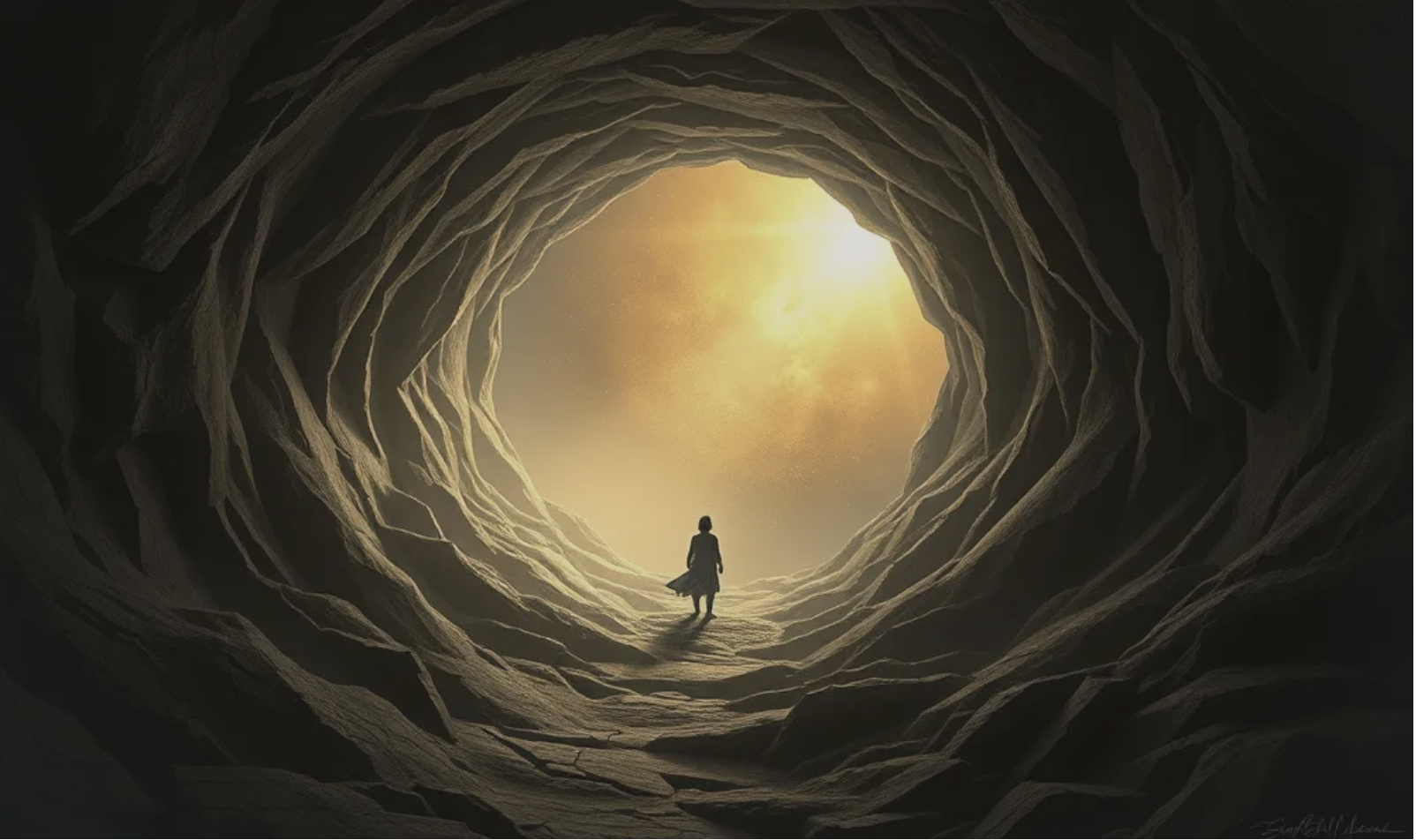
Bhavsāgar is what ancient yogis described as “the void of illusion,” located in the abdominal cavity. It is a deep ocean of constant becoming where sensations, reactions, desires, fears, identities, and experiences keep repeating themselves.
If you look closely at life, the pattern becomes pretty obvious.
Different partner.
Same emotional drama.
Different job.
Same frustration.
Different goal.
Same restless feeling a few months later.
It feels like life is moving forward.
But sometimes it’s just the same wave coming back again and again.
Welcome to Bhavsāgar, The Void of Illusion
A place where the mind keeps chasing the next wave, believing the next thing will finally make everything feel settled.
Yoga science explains that this loop isn’t just psychological.
It’s energetic.
In subtle anatomy, prāṇa, life force, moves through the body through a network of nāḍīs, energy threads or lines. These energetic currents influence breathing, digestion, perception, and even our thoughts.
When prāṇa is unstable, the mind becomes reactive.
A sensation appears in the body.
For example, your stomach tightens when someone doesn’t text you back.
Energy moves through the system.
The body reacts first, maybe your chest feels heavy, your stomach drops, your breath becomes shallow.
Then the mind tries to explain the sensation.
Thoughts start forming around the feeling.
“Did I say something wrong?”
“Maybe they’re losing interest.”
“Why does this always happen to me?”
The original event was simple, someone hasn’t replied yet.
But the sensation in the body triggered energy moving through the system, and the mind quickly built a story around that sensation.
This is how the loop begins.
A sensation appears.
Energy moves.
The mind creates a story.
And before you realize it, you are tugged by an invisible riptide pulling you under.
Awareness gets pulled into the whirlpool.
Yoga science describes this as being swept away by Bhavsāgar, the void of illusion.
What’s interesting is that modern science also describes something very similar through evolution and the nervous system.
When life first evolved, organisms didn’t have the kind of intellectual brain humans have today.
Early life forms mostly functioned through basic survival systems centered around digestion and sensation. In simple terms, the gut system came before the brain.
There was no overthinking. No analysis. Not even verbal language.
No one was saying, “Why didn’t you text me back?”
Life was very simple.
Eat.
Sense danger.
Run.
Only much later through evolution did more complex nervous systems develop, including the brain and eventually the human prefrontal cortex, the part of the brain responsible for reasoning, planning, and thinking about the future.
And even later, humans developed language.
Suddenly we weren’t just reacting to life anymore, we were talking about it.
We could tell stories, explain things, create identities, and analyze every situation from ten different angles.
The thinking brain became incredibly powerful.
But the older system never disappeared.
The body still runs on sensation first, and the thinking mind usually arrives a few seconds later trying to explain what just happened.
Even today, animals operate very differently from humans.
Most animals have much smaller brains compared to humans and rely far more on their gut-based nervous system and instinct.
Sensation and Reaction
Animals operate through sensation only. For example, if a dog suddenly hears a loud noise outside the house, it doesn’t stop to analyze what it might be.
There is no thinking like, “Is that the wind, or maybe a delivery truck?”
The dog reacts immediately.
Sound appears.
The body senses something unfamiliar.
The dog starts barking or runs to the door.
Sensation, reaction.
Animals respond directly to survival cues like this. Their nervous system reacts instantly to what the body senses, without overthinking it.
Humans still have this system too, but because we developed a large prefrontal cortex, our reactions are often followed by thoughts, stories, and analysis.
“I always attract this kind of person.”
“I’m just an anxious person.”
“I’m bad with money.”
“This is just how my life works.”
The Gut Brain in Humans
Since the old survival gut system never disappeared.
The body still contains a large network of nerves in the gut that communicates with the brain through the vagus nerve.
This is where the idea of gut intuition comes from.
In fact, most signals in this gut–brain system travel from the gut to the brain, not the other way around. That’s why people say, “I have a gut feeling. I can’t explain it in words, I just know this is bad for me.”
Which means the body often reacts before the thinking mind even understands what is happening.
Body sensation → nervous system signal → brain interpretation → thought/story.
How thought forms are created
A sensation appears in the body.
The nervous system reacts instantly.
Then the brain creates a thought to explain the reaction. This is what is known as a thought form, a thought literally forming in the mind.
Before you even realize it, the loop has already started.
A trigger creates a sensation.
The sensation creates a reaction.
The reaction creates a thought.
The thought reinforces the reaction.
Over time these loops start to feel like who you are.
“I always attract this kind of person.”
“I’m just an anxious person.”
“I’m bad with money.”
“This is just how my life works.”
Yoga science describes this state as being caught in Bhavsāgar, the void of illusion where sensations, prāṇa, and reactions keep generating the same patterns again and again.
prāṇa = life force, vital energy, breath
āyāma = expansion, extension, stretching, lengthening
This might come as a shock to you, but the goal of yoga was never just stretching or even relaxing.
Yoga was actually designed to stabilize the system by regulating the flow of prāṇa.
Prāṇāyāma
Breath Regulation
Prāṇāyāma, breath regulation, stabilizes the flow of prāṇa hence the name Prāṇāyāma.
prāṇa = life force, vital energy, breath
āyāma = expansion, extension, stretching, lengthening
Bandhas
Energy Locks
Bandha, often called energy locks, are subtle muscle engagements that help contain and direct prāṇa, life force energy.
Mūla Bandha, root lock
A gentle lift of the low pelvic floor muscles that stabilizes the base of the body.Uḍḍīyāna Bandha, abdominal lift
A light drawing in and upward of the lower abdomen below the navel.Jālandhara Bandha, throat lock
A slight lowering of the chin toward the chest that regulates pressure in the upper body.
These locks help guide and contain the energy through the body instead of letting it scatter.
Meditation
Dhāraṇā
When this is combined with meditation, specifically dhāraṇā, meaning concentration, awareness learns to stay steady on one point, that area in the abdominal cavity, Bhavsāgar, the void of illusion, instead of being pulled by every sensation that arises from it.
You sit with it quietly. You become aware of it. And that is how it begins to lose its power over you.
It’s like when you were a kid afraid of monsters under the bed. That fear was a story in your mind. But when you turned on the light and looked under the bed, you realized there was no monster.
That is the essence of enlightenment.
You realize these are sensations that trigger thoughts, and thoughts that create stories, and stories that keep the illusion alive.
When prāṇa becomes stable, the nervous system becomes more stable too.
And something simple but magnificent begins to happen.
A little space appears, a gap.
In that gap, awareness sees the riptide instead of being pulled by it.
The sensation might still show up.
The thought might still appear.
But you are no longer caught in the whirlpool, gasping for air and dragged deeper by every turn.
In summary
This yogic technique is designed to unshackle you from the painful illusion by freeing awareness from identifying with Bhavsāgar.
Calm your nervous system with prāṇāyāma → contain you energy with bandhas → focus your awareness on Bhavsāgar in the abdominal cavity → observe your sensation without reacting → the illusion dissolves.
This is the beginning of stepping out of Bhavsāgar.
Not by escaping life.
But by seeing the void of illusion clearly enough that it stops running your mind and ruining your life.
And when the illusion dissolves, the mind becomes quiet, the body softens, and life begins to move with you instead of against you. You stop fighting every wave and start floating with the current, steady, clear, and at peace within yourself. That is what yoga is all about. You see how it has nothing to do with poses, handstands, or perfect Instagram reels, and everything to do with finally understanding your own mind.
What’s next?
I will be unfolding this deeper through Yogi Maha Method Journal and inside the spaces where we practice, not just talk. Consider this your invitation to stay close to this work, because what is coming is not more information, but real transformation. The kind that shifts identity, restores alignment, and reconnects you to your true nature.
This is Yoga
Not performance
Not image
Not superiority
Self-Realization
Finally…
In Yogi Maha Method training, we study these ancient yogic techniques not just as exercises, but as a system for stabilizing awareness. A quiet space where you begin to see yourself more clearly, beyond the noise, beyond the stories, beyond the illusion. You can explore this work inside the in-person training or through the online version, wherever you are in the globe. If something in you feels drawn to that kind of work, trust that feeling and stay close to this path.
May you be healthy. May you be happy. May you be at peace. The light and the goodness within me see and honor the light and goodness within you.
In other words - Namaste my friend.
P.S. If this resonated, restack or share so it reaches the person who needs it.