When Your Life Crashes After You Did Everything Right
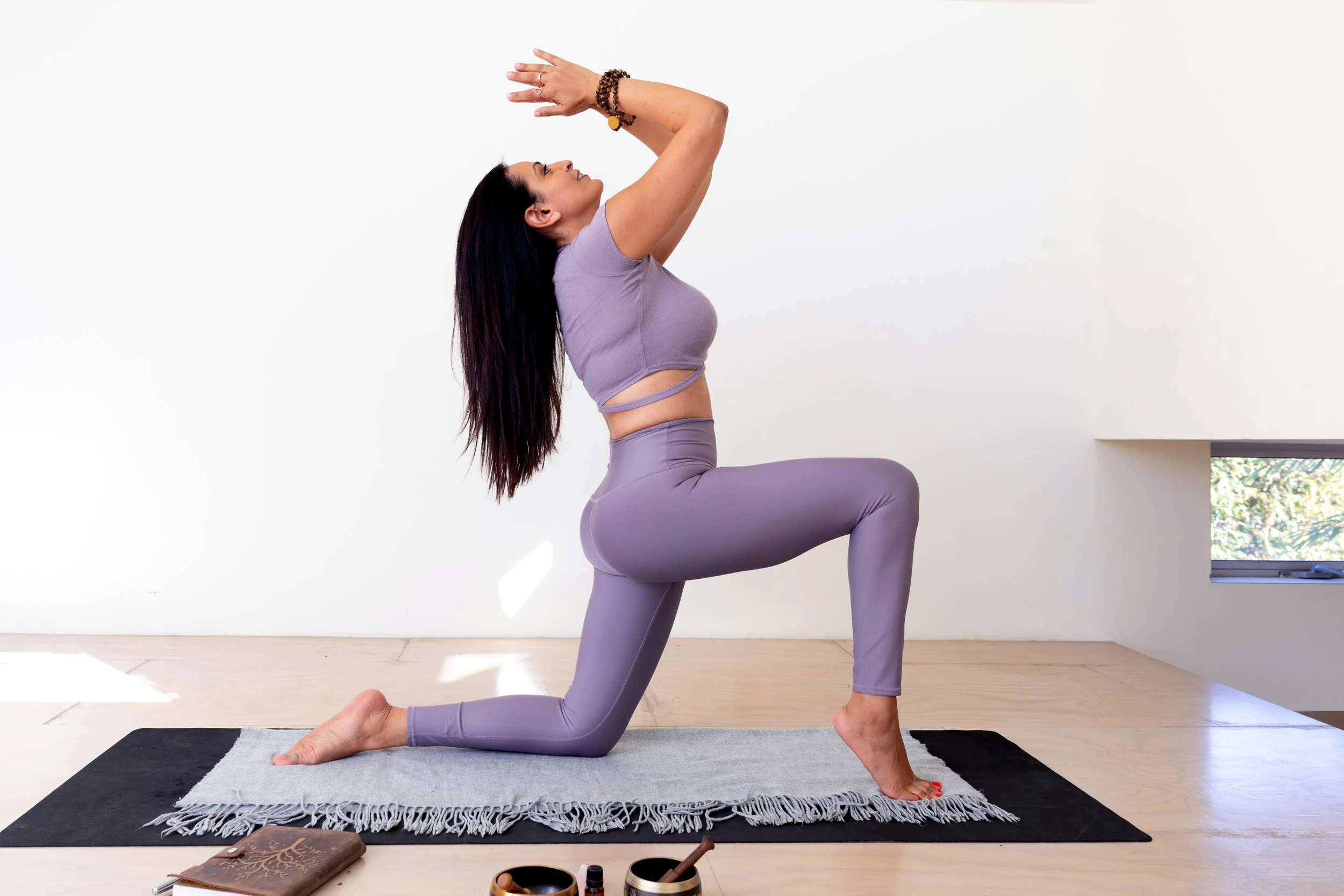
The truth about dopamine crashes, nervous system shutdown, and why self compassion is not optional
There’s this moment that no one talks about.
You do everything right. You show up. You put in the work. You live well, think well, try to make the right choices in life. And then something happens that doesn’t fit into your story at all.
And your system just… crashes.
We live in a culture that tells you to push through it. Fix it. Reframe it. Say something better to yourself. “I am strong.” “I am resilient.” “I am this, I am that.”
I taught that once too.
Then life happened in a way I couldn’t out-discipline.
I’ve spent my entire life in this work. If I’m not teaching yoga, I’m practicing. If I’m not practicing, I’m writing, studying, or training and certifying aspiring yoga teachers through Yogi Maha Method. My life has been structured around awareness, consistency, and taking care of my body and mind.
And then cancer showed up.
No warning. No slow buildup. Just… there.
What surprised me wasn’t just the diagnosis. It was what happened after.
I did rise to the occasion. I went straight into warrior mode. I tend to do well in crisis. Growing up in an unsafe environment with a mentally unstable mother, I spent my entire childhood in survival mode.
So I handled cancer head-on.
I used everything I knew. Every yoga tool. Every mindfulness practice. I stayed focused, disciplined, and steady through it.
And then the war ended and I won.
I was cancer-free.
And that’s when I crashed.
Completely.
There was this heavy inertia in my system. Like something had shut down. I couldn’t access the same clarity, the same drive, the same sense of direction I had relied on my whole life.
I started questioning everything I believed in.
My existence. My belifes. Even my yoga practice.
Did I make a mistake?
Did I choose the wrong path?
Did I get duped?
Did I get fooled?
Am I not as smart as I thought I was?
And underneath all of that, one thought kept creeping in:
“Did I mess up my whole life up?”
That’s the part no one prepares you for.
Because the mind begins to believe that effort does not matter.
And that’s where things start to spiral.
Psychology actually has language for this now. It’s often called a dopamine crash.
Dopamine is a brain chemical tied to motivation, reward, and expectation. It’s what drives you to act, to work toward something, to believe there will be a payoff.
When you put in a lot of effort and expect a certain outcome, the feel good chemical in your brain, dopamine, rises. Your system desperately craves that result.
But when the outcome doesn’t match the expectation, dopamine drops sharply.
That’s called a dopamine crash.
Motivation drops. Energy drops. Everything feels useless. And the mind starts scrambling to explain it.
You start questioning everything.
If that state lingers too long, it can hardwire into something deeper. The brain starts learning, “Nothing I do works.” That’s how people slide into learned hopelessness without even realizing it.
But here’s the part that changed everything for me.
I didn’t fail.
I got sick.
Those are not the same thing.
That’s the reframe.
Because the mind will automatically turn any setback into a personal failure. It collapses everything into “something is wrong with me.” Especially if that was the voice you heard coming at you growing up from a parent.
Reframing interrupts that pattern.
It doesn’t deny what happened.
It names it accurately.
And that one shift from “I failed” to “this happened” is what gives your nervous system room to stabilize instead of spiral.
It sounds obvious when you say it like that, but your nervous system doesn’t automatically make that distinction. It just feels the collapse and tries to explain it.
You see this everywhere.
In a relationship, you show up, you try, you stay committed. And when things start to feel disconnected or strained, the mind goes straight to, “What’s wrong with me?”
In work, you push, you build, you do everything you’re supposed to do, and when something doesn’t land, it feels personal.
But not everything is personal.
Some things are just life.
In yoga philosophy, this is called prakriti, the ever-changing nature of life, constantly moving, shifting, unfolding beyond your control.
And from a nervous system perspective, your brain is wired to personalize uncertainty to regain control, even when there’s nothing to fix.
Not that long ago, psychology had a stigma.
Twenty, thirty years ago, going to therapy meant you were “crazy.” Something was wrong with you. You were unstable. Broken. It wasn’t something successful, high-functioning people talked about openly.
Medicine back in the day treated the body. Psychology dealt with the mind. And the two barely spoke to each other.
Now look at it.
Therapy is normalized. It’s almost expected. The same way you go to the gym or hire a trainer, people invest in their mental health. High-performing individuals don’t wait until they collapse. They have a therapist on speed dial.
But even then, the focus stayed in the mind.
You talk. You analyze. You understand your patterns. And yes, that helps.
But something was still missing.
Because the body was never really integrated with the mind and emotions.
Now cutting-edge modern research is finally catching up to what ancient yogis have mastered for thousands of years: the body stores everything.
Stress doesn’t just live in your thoughts
Fear doesn’t just live in your thoughts
Shock doesn’t just live in your thoughts
It gets trapped in your nervous system. It lives in your muscles, your breath, your posture. It becomes your baseline.
And no amount of talking alone fully releases that.
That’s where somatic yoga practices come in.
Not more thinking. Not more analyzing.
Working directly with the body.
Breath. Movement. Sensation. Awareness.
Not fixing the story, but unwinding what’s been held underneath it.
We always hear about fight, flight, or freeze. But let’s focus on freeze. What happens when the war is over, when the welcome-home hero’s parade ends, when everyone goes home and everything goes quiet. When the body shuts down, holds, stops moving. Energy gets trapped. Emotions get stuck. That heavy inertia you feel is not laziness. It’s your nervous system protecting you.
And this is where vinyasa becomes more than just a style of yoga.
Vinyasa literally means flow.
Movement linked with breath.
When you move your body in a slow, intentional way, you’re not just stretching. You’re helping those frozen, trapped emotions begin to unfreeze. To move. To finally be released.
Not by forcing them out.
But by creating enough safety for them to flow.
And this is where yoga becomes an embodyment healing modality.
Not as a workout.
Not as stretching.
But as a system designed to work with the body and the mind together.
Yoga has been around for thousands of years… and only now is being taken seriously.
And this is where self-compassion stops being a trendy word and becomes something medically trained physicians prescribe.
Not the soft, “everything happens for a reason” version.
The kind where you interrupt the moment your mind turns a setback into a judgment about who you fundamentally are.
Where instead of spiraling into “I am a failure,” you catch it and say, “This is a setback.”
That one shift matters more than people realize.
Because the nervous system doesn’t stabilize when you try to become better.
It stabilizes when it feels safe.
Safe enough to not perform
Safe enough to not explain
Safe enough to not immediately fix
Safe enough to be present
That’s what actually allows you to begin to move forward in life.
Not force. Not pressure. Not another affirmation layered on top of anxiety.
Just enough awareness to not turn a hard moment into a permanent identity.
It’s simple. Almost too simple.
Which is why most people miss it.
Now lets talk about what self compassion actually is. In Buddhism, self compassion is the foundational practice of treating yourself with kindness, understanding, and acceptance, seeing yourself as worthy of care just as you would others. It bridges emotional resilience and mindfulness, often beginning with loving kindness meditation known as metta, where compassion is first directed inward before extending outward to all beings.
In case you are wondering about the difference between these two ancient spiritual paths, yoga came first. Its earliest practices were established in ancient India thousands of years before Buddhism emerged. In fact, before Siddhartha Gautama became the Buddha, he studied under yoga masters to learn meditation and breath practices. While yoga is the original, foundational tradition, Buddhism grew out of that same world and later influenced how these teachings were refined, articulated, and shared.
If you feel pulled to understand yoga more deeply, beyond surface-level wellness trends, this is the kind of work we explore inside Yogi Maha Method 200 Hours Yoga Alliance Certifited Teacher Training, offered both online and in person in Los Angeles, CA.
The next time something doesn’t go your way, don’t go straight into your head. Your system just had a dopamine crash, like a car crash. It’s not safe to drive.
Go to your body.
Close the blinds.
Light an incense stick.
Play binaural beats in the background.
Roll out your yoga mat.
Make your space feel safe, even if it’s just your bedroom.
And move.
Not a workout. Not a class.
Just move your body for 15–20 minutes.
Slow. Simple. Intentional.
Stretch. Breathe. Let your shoulders drop. Let your hips open. Let your body release what it’s holding without needing to explain it.
You’re not trying to fix the situation.
You’re practicing compassionate accountability.
Meeting yourself honestly without judgment, while still staying responsible for how you move forward.
You’re teaching your nervous system that it’s safe to move again.
That it’s safe to come out of that freeze.
And as you move, you can invite in a few simple words:
This is hard
This is a moment of suffering
May I be kind to myself
May I give myself what I need
I love myself unconditionally
I am doing my best in a difficult situation
Not to convince yourself of anything.
Just to meet yourself where you are.
Then, if you want, you can name it:
This is a setback.
Not a failure.
But the real work is this creating enough safety in your body that you don’t stay stuck in the story.
In the next post, I’m going to talk about how yoga classes can actually make you feel worse when they’re not taught the way they were fundamentally meant to be.
If this resonated with you, you may also want to read my earlier piece, The Yoga of Love. To Know Love, We Have to Polish the Mirror of Our Hearts.