How to Become a Yoga Teacher in Los Angeles
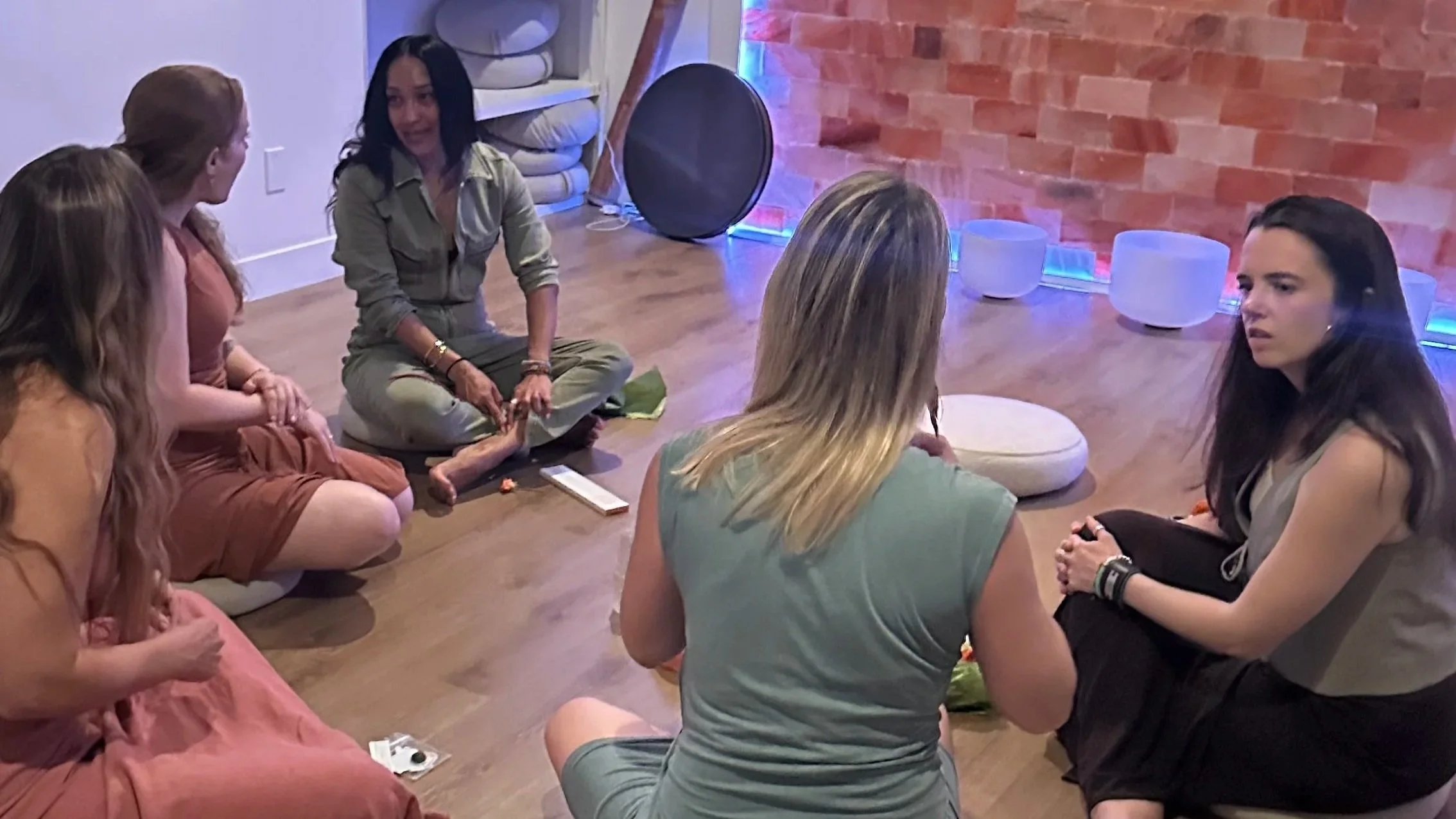
A Complete Guide to Choosing the Right Training
Becoming a yoga teacher is not simply about learning how to lead poses.
It is an initiation into something much greater.
You are learning how to hold space, guide transformation, understand the human body, communicate with intention, embody ancient yogic wisdom, and ultimately become the kind of teacher people trust with their physical, mental, and spiritual well-being.
If you are searching for a yoga teacher training in Los Angeles, there are more options than ever before.
But not all yoga teacher trainings are created equal.
Your 200-hour yoga teacher training becomes the foundation upon which your entire teaching career is built. Choosing the right school matters.
Step 1: Complete a 200-Hour Yoga Teacher Training
For most aspiring yoga teachers, the journey begins with a 200-hour yoga teacher training.
A high-quality training should go far beyond memorizing poses and Sanskrit terminology.
You should learn how to intelligently sequence a complete class, understand biomechanics, confidently cue different bodies, offer modifications, understand yoga philosophy, and actually practice teaching yoga to other durring the training.
Because knowing how to practice yoga and knowing how to teach yoga and guide a room full of students are two very different things.
At Yogi Maha Method, trainees don't simply learn poses.
They teach.
The intention is for you to leave your training with the practical experience, confidence, and professional foundation to step into a studio and lead a class.
Step 2: Choose Your Yoga School Carefully
Los Angeles is home to countless yoga studios and teacher training programs, and choosing between them can feel overwhelming.
Look beyond the certification.
Ask yourself:
Who will actually be teaching me?
How much experience do they have?
Will I receive individual feedback?
Will I practice teaching real people?
Will I understand how to build a class from beginning to end?
Will I learn how to work with different bodies?
Will I learn meditation, breathwork, philosophy, sequencing, and the business of becoming a professional teacher?
And perhaps most importantly:
Will this training transform my own practice and understanding of yoga?
Your teacher training should be more than a certification.
It should transform you.
Step 3: Look for Depth, Not Just a Certificate
Yoga teacher training has become more accessible than ever, both online and in person. That accessibility is valuable because there is no single format that is right for every student.
What matters is the depth and quality of the education behind it.
A yoga teacher training should not simply move you through enough material to receive a certificate. It should develop your ability to think, teach, observe, communicate, lead, and embody what you are learning.
If you choose in-person training, there is profound value in being witnessed by your teacher, receiving immediate feedback, practicing with other trainees, learning how to read a room, and discovering how your voice changes when you stand in front of real students.
If you choose online training, look for a comprehensive curriculum that allows you to study deeply, revisit material, progress at your own pace, and learn from a school whose philosophy and standards resonate with you.
The format matters.
But the consciousness, methodology, and quality behind the training matter more.
Step 4: Learn More Than Asana
Yoga is thousands of years old.
The physical practice is only one dimension of an extraordinarily sophisticated system for understanding the mind, body, consciousness, and human experience.
A transformational yoga teacher training should expose you to the deeper teachings of yoga, including meditation, pranayama, philosophy, subtle energy, self-inquiry, and self mastery.
At Yogi Maha Method, ancient yogic wisdom is integrated with somatic healing, teaching methodology, and practical application.
Intellectual knowledge alone is not enough.
The teachings must eventually move from the mind into the body, heart, and way you live.
That is where information begins to become wisdom.
Step 5: Learn How to Actually Build a Career
This is one of the most overlooked parts of yoga teacher training.
You can become an extraordinary teacher and still struggle professionally if nobody ever teaches you how to turn your education into a sustainable career.
Yoga teachers deserve to be compensated for meaningful work.
That is why professional development and the business of yoga are an important part of Yogi Maha Method.
Teacher training should prepare you for the world you are actually entering, whether you dream of teaching at respected yoga studios, developing private clients, leading workshops and retreats, creating online offerings, or eventually building a yoga business of your own.
Your certification should be the beginning of your career, not the end of your education.
Step 6: Choose a Teacher Who Has Embodied the Practice
There is a dimension of yoga that cannot be measured by flexibility, popularity, charisma, or how beautifully someone performs an asana.
It is presence.
Yoga was traditionally transmitted through a sacred relationship between teacher and student. The student did not simply receive information from the teacher. Through proximity, observation, practice, and devotion, they entered a field shaped by what the teacher had spent years cultivating within themselves.
This is why choosing your teacher matters so deeply.
A teacher may know every posture, deliver an impressive class, have a magnetic personality, a large social media following and understand exactly how to energize a room.
But yoga asks something more of us.
Has the teacher done the inner work?
Have they practiced tapas, the discipline of transformation, and svādhyāya, the continuous examination of the self? Have they learned to witness their own ego, regulate their nervous system, sit with discomfort, move through suffering, and return again and again to awareness?
Over time, that work changes a person.
Their presence becomes different. Their nervous system becomes steadier. Their words carry a different weight. You may feel something in their presence before you can intellectually explain what you are feeling.
This is the sacred transmission of yoga.
Some traditions describe this through the relationship between guru and śiṣya, teacher and student. In modern language, we might speak of consciousness, resonance, energy, or frequency.
Whatever language you choose, the principle is the same:
We absorb far more from our teachers than the information they consciously give us.
When a teacher has spent years raising their own level of awareness, something becomes available to the student through proximity to that consciousness.
You are not simply learning what the teacher knows.
You are experiencing what the teacher has become.
This is one of the great distinctions between learning yoga as information and receiving yoga as a living tradition.
At Yogi Maha Method, this philosophy is central to teacher training. I have spent 18 years not only teaching yoga, but attempting to live it. Through practice, meditation, self-study, adversity, healing, teaching, and continuous inner work, the Method has evolved alongside my own evolution.
I do not believe a yoga teacher's greatest qualification is how advanced their poses look.
I believe it is the depth of consciousness from which they teach.
Your teacher training should absolutely give you exceptional technical education. You should understand anatomy, biomechanics, sequencing, cueing, meditation, breathwork, philosophy, adjustments, leadership, and how to build a sustainable career.
But those are the foundations.
The deeper question is:
Who are you becoming while you learn them?
Whether you ultimately choose an in-person or online yoga teacher training, do not choose solely because it is convenient, popular, aesthetically appealing, or promises a certificate.
Look at the consciousness behind the curriculum.
Look at the life behind the teacher.
Look for someone who honors yoga not simply as a profession or physical practice, but as a path they are still walking themselves.
Because the most profound teachers do more than teach you how to perform yoga.
Through their presence, they remind you of what you have the capacity to become.
Step 7: Make Sure Your Training Prepares You to Actually Teach
A certificate alone does not make someone a powerful teacher.
Teaching does.
Look for a yoga teacher training where you will develop the practical skills required to guide other human beings safely and confidently.
Sequencing.
Cueing.
Anatomy and biomechanics.
Modifications.
Hands-on adjustments.
Communication.
Leadership.
Holding space.
And most importantly, actually teaching.
At Yogi Maha Method, hands-on, real-world application is central to the in-person training. Trainees are challenged to develop their own authentic teaching voice rather than simply imitate their teacher.
The goal is not to create copies.
The goal is to develop knowledgeable, confident, highly skilled teachers who are shaping the future of yoga around the world.
Do You Need Yoga Alliance Certification?
If becoming a Registered Yoga Teacher [RYT-200] is important to you, choose a school whose training meets Yoga Alliance requirements.
Upon successfully completing Yogi Maha Method 200-hour yoga teacher training, graduates receive their 200-hour certification and become eligible to register with Yoga Alliance as an RYT-200.
This provides an internationally recognized professional foundation while allowing you to continue advancing your education throughout your career.
Your First Yoga Teacher Training Happens Only Once
There will always be faster programs.
There will always be cheaper programs.
There will always be another certification you can collect.
But your first yoga teacher training happens only once.
Choose the education that reflects the caliber of teacher you intend to become.
I created Yogi Maha Method after 18 years of studying, practicing, teaching, and working in this field. I built the training I wish I had received when I first became a teacher.
One that honors the spiritual depth of yoga without abandoning modern science.
One that develops a master yoga instructor rather than merely a practitioner.
One that integrates ancient yogic wisdom with anatomy, biomechanics, sequencing, meditation, breathwork, professional development, and real-world teaching experience.
And one with elevated standards for what it means to call yourself a yoga instructor.
Yogi Maha Method offers both in-person yoga teacher training in Los Angeles and a fully online, self-paced 200-hour teacher training for students around the world.
If you feel called to teach yoga, take that calling seriously.
Your students will one day place enormous trust in you.
Become the teacher worthy of that trust.